E.Kage is a taiko and digital audio artist, as well as a longtime Audio Visual Technician at the Vancouver Art Gallery. In this personal reflection, they explore how Enemy Alien: Tamio Wakayama resonates deeply with their own lived experience growing up in Vancouver’s Nikkei community. The exhibition sparks many fond memories, bringing together iconic images of those who have since passed alongside elders seen again in their younger years. Through reflections on migration, activism and cultural belonging, Kage traces formative moments—from community life at Tonari Gumi to the transformative power of taiko—and considers how Wakayama’s photographs, including a joyful scene from a Tonari Gumi Christmas party in the 1970s, capture intimacy, resistance and collective identity across generations.
Visit the Gallery to experience the histories, relationships and moments of connection that continue to echo today in Enemy Alien: Tamio Wakayama, only on view until February 22, 2026.
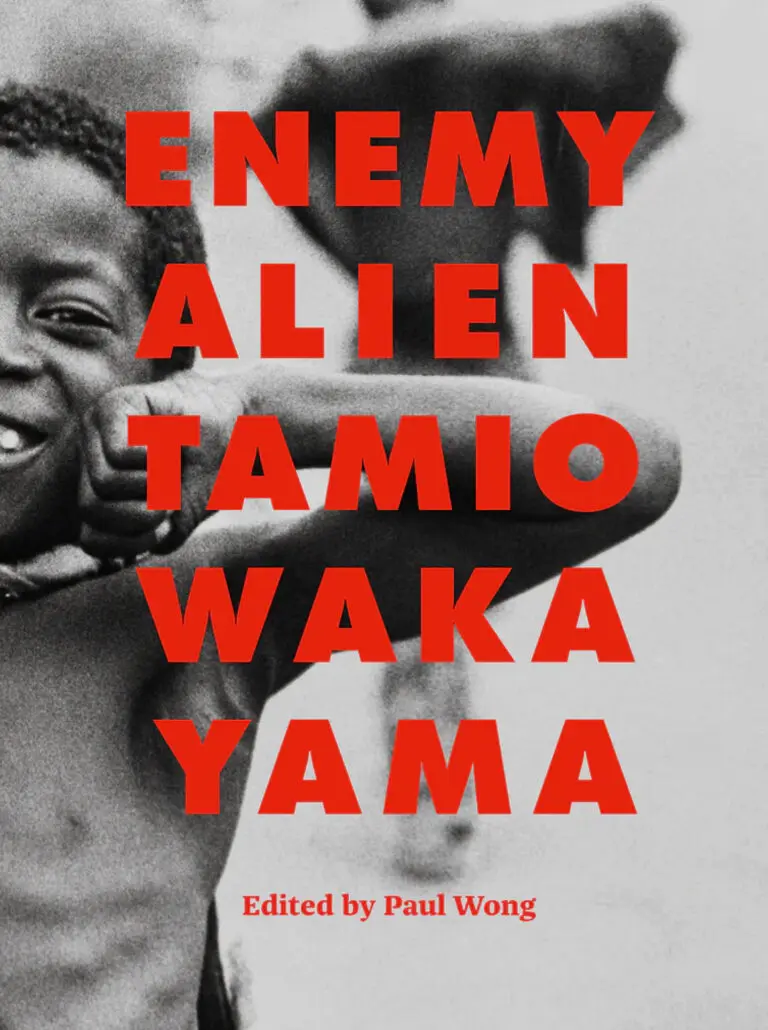
Enemy Alien, Tamio Wakayama’s posthumous exhibition that closes soon at the Vancouver Art Gallery, tells the story of Tamio’s journey as an artist and activist coming full circle, back to his Nikkei roots of the West Coast. This period of the mid 1970s through the 1980s coincided with my developmental years as a newly immigrated youth in Vancouver.
It was 1975. I was nine years old when my family relocated from Japan. My father Tatsuo Kage was engaged in the local Nikkei community, founding the Japanese Immigrant’s Association; serving on the Board of Tonari Gumi; getting involved with the Powell Street Festival; and later working with the Redress Committee, the Japanese Canadian Citizen’s Association (JCCA) and the National Association of Japanese Canadians (NAJC) Human Rights Committee, among other initiatives.
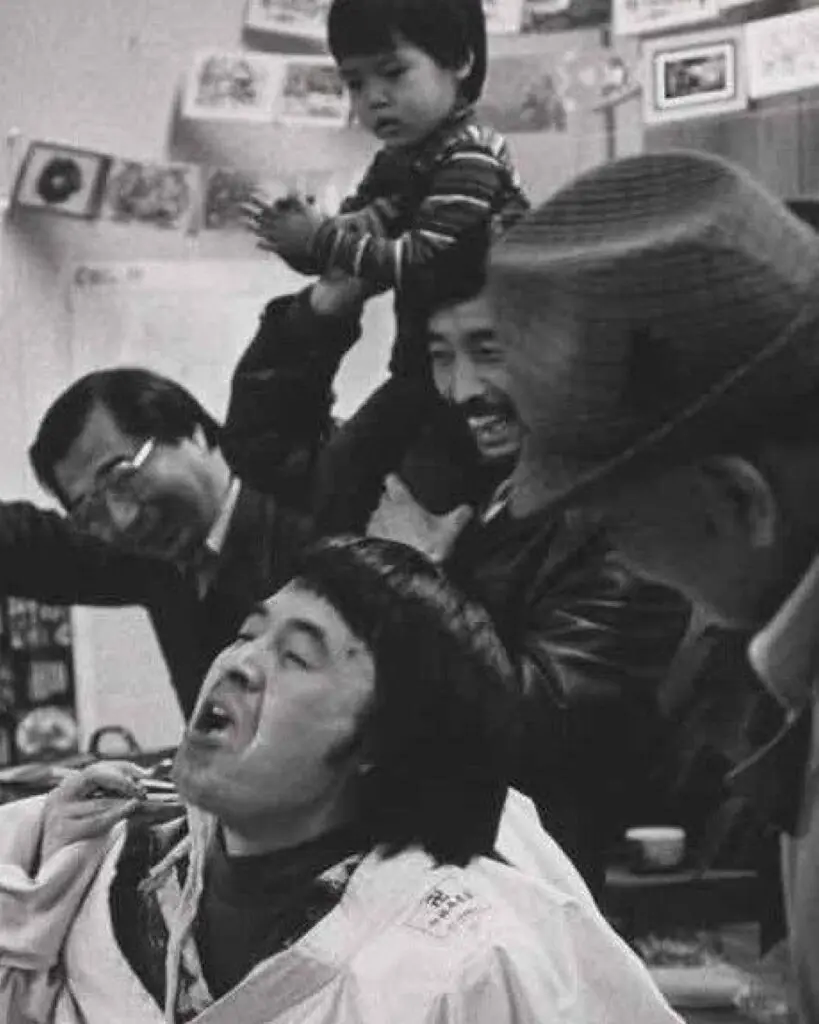
Tamio’s exhibit sparks many fond memories of that time. There are iconic images of those who have passed on, along with elders of today in their younger years. One such photo is a scene from Tonari Gumi at a Christmas Party circa 1978. In this photograph, we see in the foreground, from left to right: Michiko Sakata, Takeo “Take-san” Yamashiro and a regular Tonari Gumi senior. In the background, we see Gordon Hirabayashi and my dad Tatsuo Kage with Len Yamashiro on his shoulders.
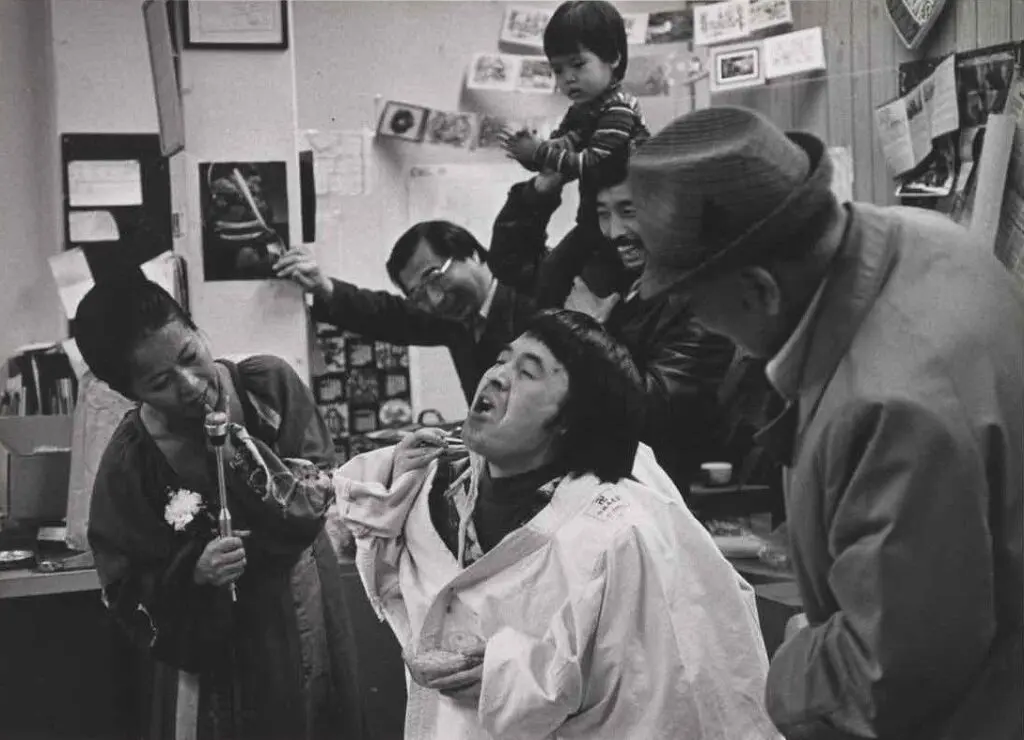
I love what is captured here: the whimsical, spontaneous, theatrical joy of that moment. My dad, a history professor in Japan turned community activist in Vancouver, is pictured with other originals of the Nikkei community. Michiko Sakata initiated the Japanese Canadian Centennial Project, which included an exhibition and accompanying book A Dream of Riches: The Japanese Canadians, 1877-1977 (1978). She also founded Language Aid, a multi-lingual service agency on Powell Street that became MOSAIC, where my dad later worked. Michiko served on the Board of Tonari Gumi and often emceed their events. Take-san is a master shakuhachi player. He was the Executive Director of Tonari Gumi for many years. Gordon Hirabayashi was renowned for the 1943 Supreme Court case Hirabayashi v. United States, which challenged the treatment of Japanese Americans during World War II. He later became a sociology professor at the University of Alberta. His son Jay Hirabayashi is a well-known senior contemporary dancer, who, along with his partner Barbara Bourget, founded Kokoro Dance in the 1980s. In 2024, I danced with them during their thirtieth annual Wreck Beach Butoh.
In my quest for more insight into this photo, I started an email thread with Michiko, Take-san, Jay and Mayumi Takasaki, Tamio’s life partner, who worked closely with guest curator Paul Wong on the exhibit.
Jay commented, “Looks like they had a lot of sake.”
Mayumi added, “I love this photo too! I think it was a Tonari Gumi Christmas party. The seniors and staff would provide entertainment. Amazingly there was no alcohol involved.”
Michiko responded, “AMAZING!! Capturing the amazing precious moment… like some great old movie shot!! That was what was happening at TG all the time.”
It turns out they were playing a popular game where someone stands behind another and acts as that person’s hands and arms. In the shot, Take-san is trying to eat a bowl of noodles.
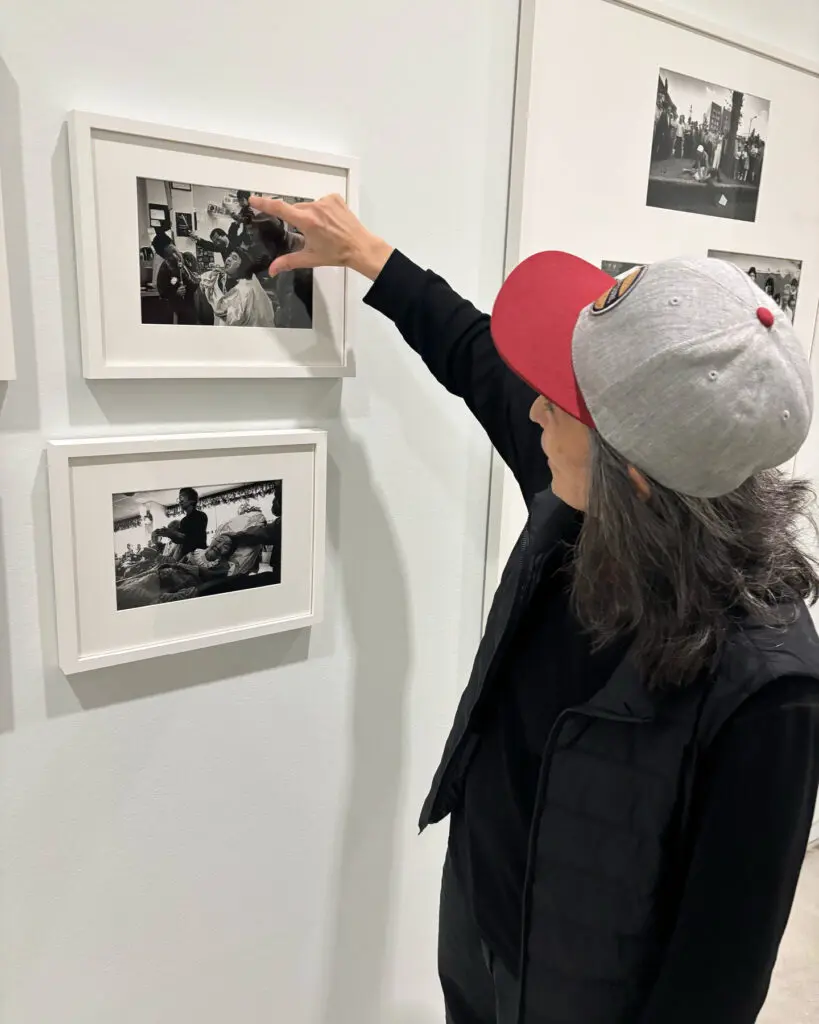
As a child, school and mainstream media were both influences that subtly and sometimes blatantly portrayed immigrants and non-white folks as less than whole. No doubt we internalized this negativity as a community. However, while tagging along with my dad during the early years, I quickly felt at home within the Nikkei community. I met activists in the prime of their lives, involved in leading much of the Nikkei-focused activities that I attended such as the Tonari Gumi coffee houses and the Powell Street Festival, which was formative for me. Here is a bit of that story.
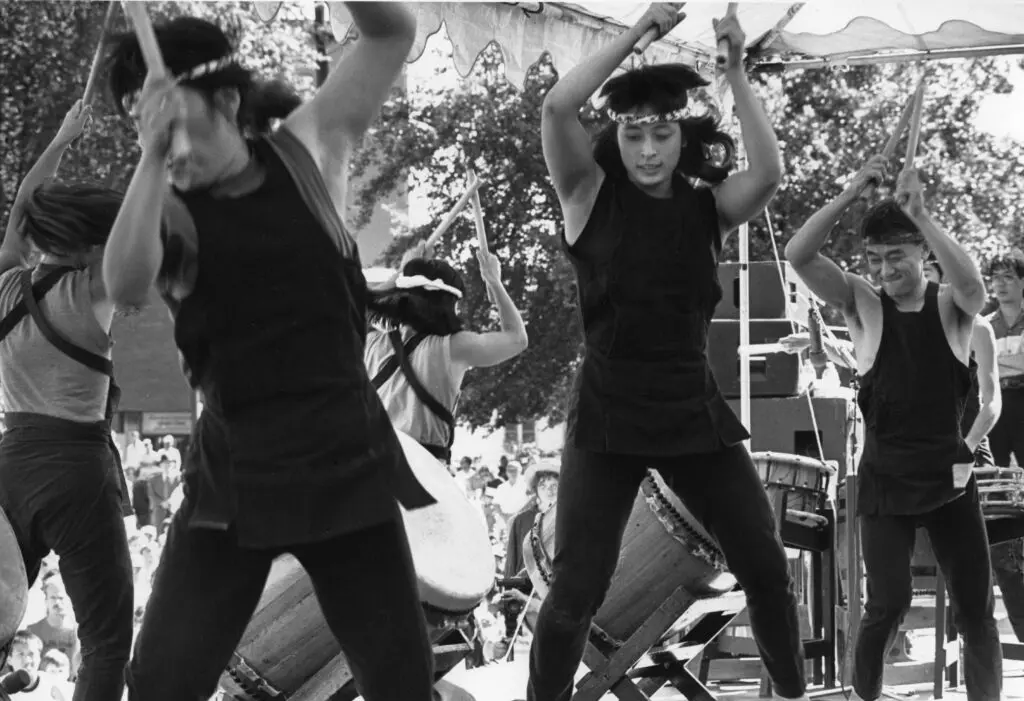
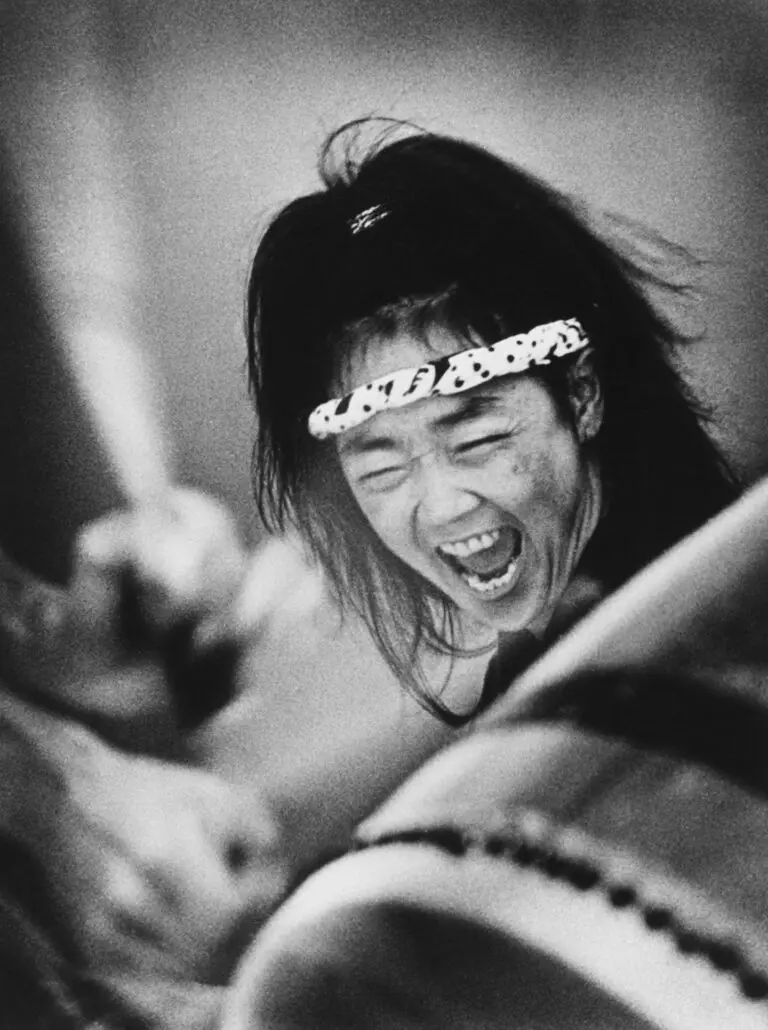
During the 1980 Powell Street Festival, I witnessed a North American taiko group, the San Francisco Taiko Dojo. For the first time I saw women and mixed folks expressing joy and exuberance on stage through taiko. I remember thinking, “Maybe I can play taiko too,” a feeling I never experienced growing up in Japan, where I saw taiko played by men in a fierce and serious style.
In 1982, I joined Katari Taiko, the first taiko group in Canada, formed in 1979. I was nurtured by the Asian activists of that time who were, like Tamio, inspired by the US Civil Rights Movement of the 1960s. They strove to honour and reconnect with their heritage after the racist events of WWII, which resulted in the mass dispossession and displacement of nearly 22,000 Japanese Canadians.
As a member of Katari Taiko, I was thrust into a mind-blowing environment that was so much more than gaining taiko skills. We practiced three times a week, operating as a collective, holding monthly meetings and rotating leadership roles. For the first time, I met Asians who I thought were “cool,” swearing like sailors while having a grounding in the activism I was learning about. We prioritized performing at socially conscious events such as the mid-1980s Walks for Peace and the Powell Street Festival. It was through my early years with Katari Taiko that I learned to express myself as a mixed-race queer youth, understanding the importance of representation and self-expression.
An impetus for forming Katari Taiko was the desire to challenge the negative stereotypes of Asians, particularly Asian women as subservient, docile and weak, that many of us experienced in North America. All members were required to perform despite the fact that some really hated it, perhaps due to shyness or discomfort at being loud and physical in front of an audience. Powerful and graceful taiko performances were a tangible way for us to fight these stereotypes. It made sense to me that this collective objective resonated with all East Asians, not just Japanese Canadians. The group’s membership was mixed and included non-Asians as well.
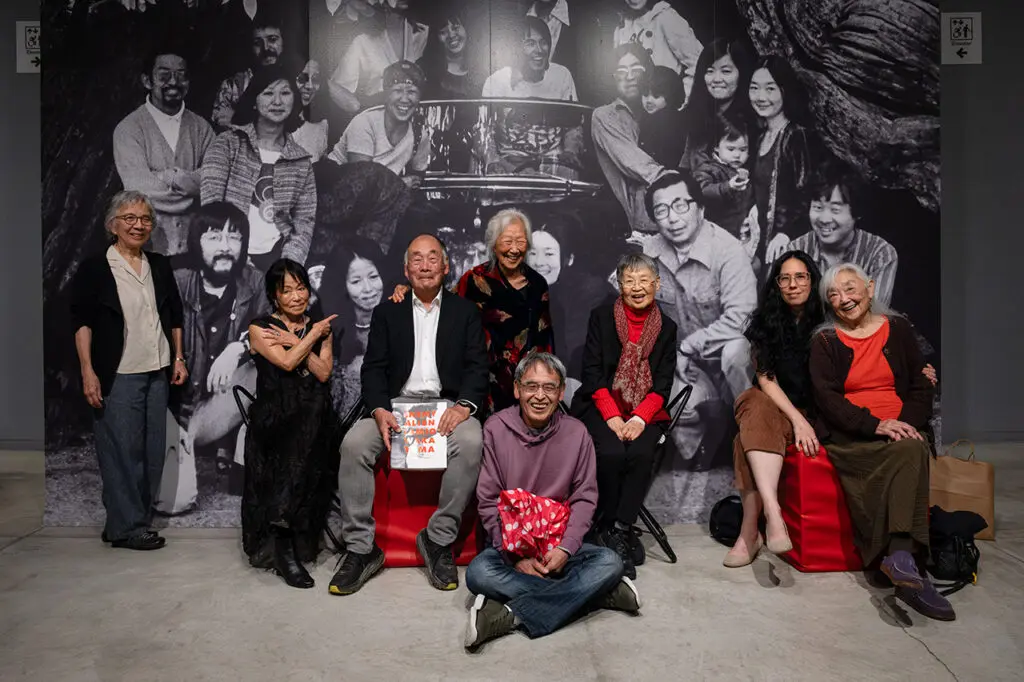
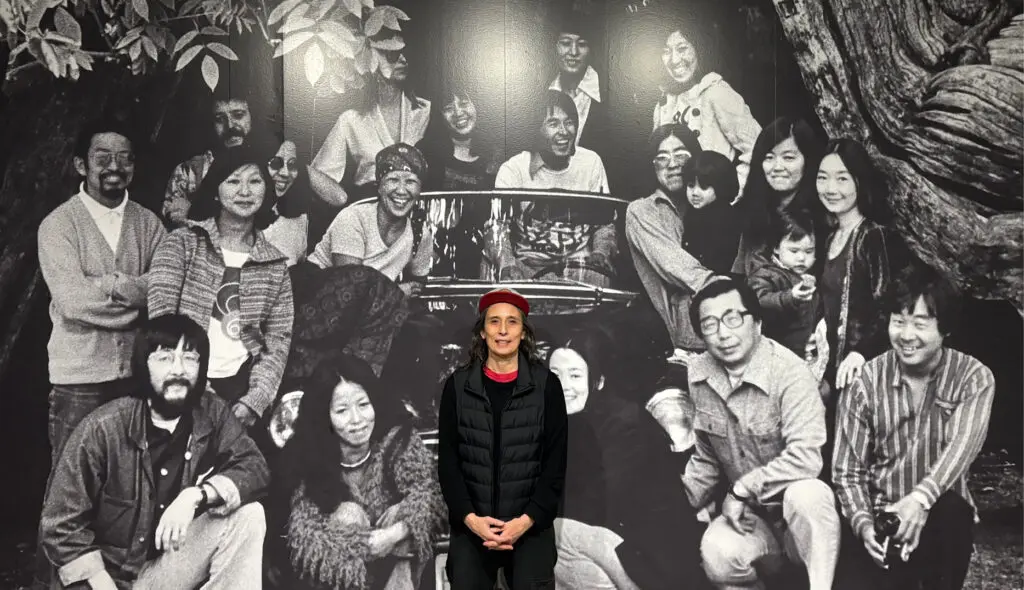
During the opening of Enemy Alien in early October 2025, I was delighted to see so many people—some of whom I have known for forty to fifty years, alongside those much younger. It felt like a family reunion that included the spirits of those who have departed, a celebration of a pivotal time and a reminder that our work remains unfinished as long as violence and injustice persist locally and globally.