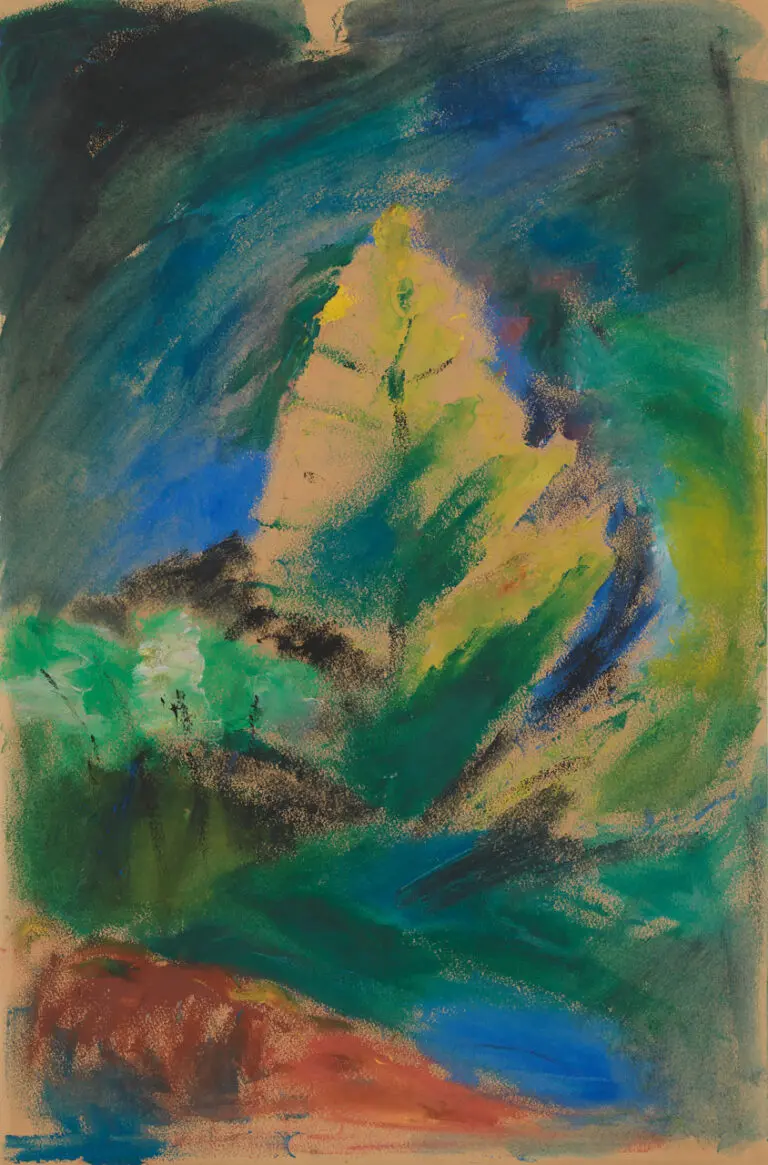
Modern Iran and the Avant-Gardes, 1948–78
December 11, 2026–May 2, 2027
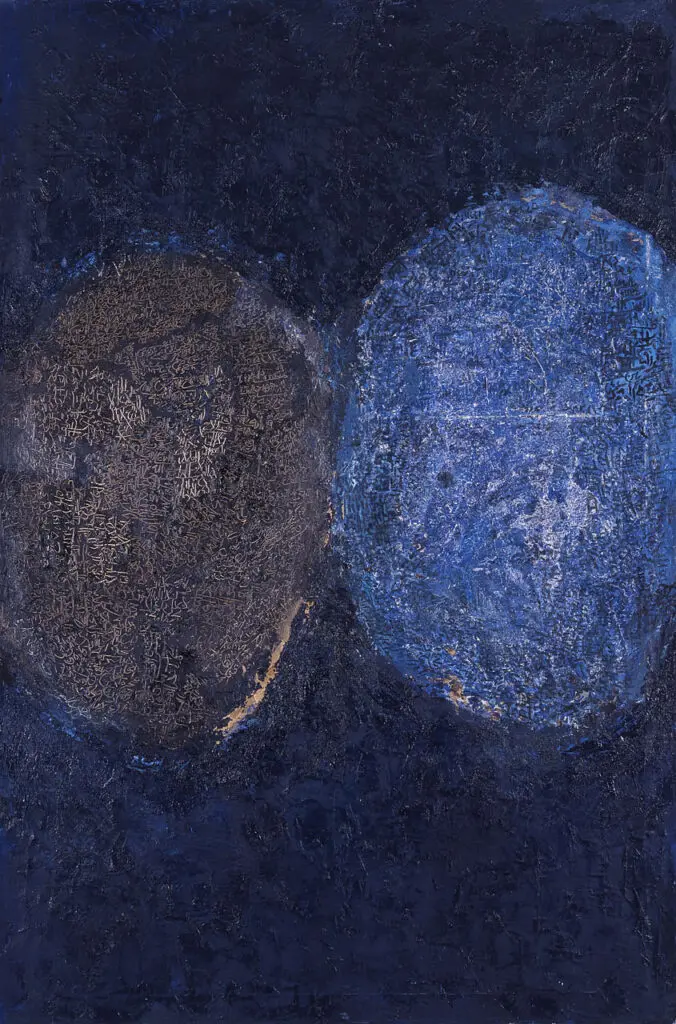
Siah Armajani, Prayer for the Sun, 1962, oil on canvas, Grey Art Museum, New York University Art Collection
For the first time in Canada, Modern Iran and the Avant-Gardes, 1948–78 explores how the complex cultural tensions of this period led to artistic innovation. As Iran became modern, modernism became distinctly Iranian.
Iranian artists sought to create a unique form of modernism that addressed the tension between commitments to innovate and an engagement with traditional Iranian ideas, cultural forms and motifs. The challenge of forging a link between “heritage” and “progress” occurred against a volatile political backdrop, in which the forces of nationalism, religious movements, technological development, and international economic and political interference all played a part. The exhibition builds on the recent proliferation of research on Iranian modernism and the broader project of making visible the diversity of global modernisms.
Presenting approximately 100 works—in painting, sculpture, mixed media, photography, drawing and architectural documentation—from some of the most influential artists of the modern period, this exhibition brings a contemporary lens to this important period of experimentation and innovation in Iran.
The most significant political event of this period was the coup d’état of 1953. Prior to the coup, the elected government of Prime Minister Mohammad Mosaddegh emphasized national sovereignty against foreign interference, and some artists reconciled this tendency by consciously fusing modernist forms, such as cubism, with visibly Iranian elements. The period that followed was characterized by growing Western influence and modernization that saw a proliferation of support for modern art and architecture. The rapidity of change, along with state repression of dissent, led to a growing resistance to both modernity and the West, creating a complex environment for artists committed to modernism.
In the years following the coup of 1953, artists worked fluidly between Iranian and Western modes of production. Many artists found recognizably Iranian pathways toward abstraction, bringing traditional Iranian art into dialogue with Western Abstract Expressionism. Through new expression of form Iranian artists positioned their work between a fixed past and an open future.
From the mid-1960s until the onset of the Islamic Revolution in 1978, Iranian cultural practices underwent a bifurcation into two streams. Some artists became pioneers of the neo-traditional approach, drawing on folk culture and traditional craft practices to forge a link between heritage and progress. Others did not situate their work within a particular lineage and instead emphasized their personal visions, both from Iran and outside. The mid-1960s also saw the opening of art to a growing number of women artists, several of whom have been overlooked by major surveys of the period until now. The exhibition concludes in 1978 when the Islamic Revolution created the current form of the Iranian state and drove many modernist artists into exile.
Featured artists include: Hossein Amanat, Massoud Arabshahi, Siah Armajani, Iran Darroudi, Kamran Diba, Seyed Mohammad Ehsaey, Parvaneh Etemadi, Monir Shahroudy Farmanfarmaian, Mansoor Ghandriz, Marcos Grigorian, Nahid Hagigat, Mansooreh Hosseini, Farideh Lashai, Reza Mafi, Leyly Matine-Daftary, Sirak Melkonian, Ardeshir Mohasses, Bahman Mohasses, Nicky Nodjoumi, Faramarz Pilaram, Shokouh Riazi, Behjat Sadr, Abolghassem Saidi, Sohrab Sepehri, Houshang Seyhoun, Masoumeh Seyhoun, Jazeh Tabatabai, Parviz Tanavoli, Mohsen Vaziri-Moghaddam, Hossein Zenderoudi and Jalil Ziapour.

Arya and Hamid Eshghi, Mowafaghian Foundation

Publication
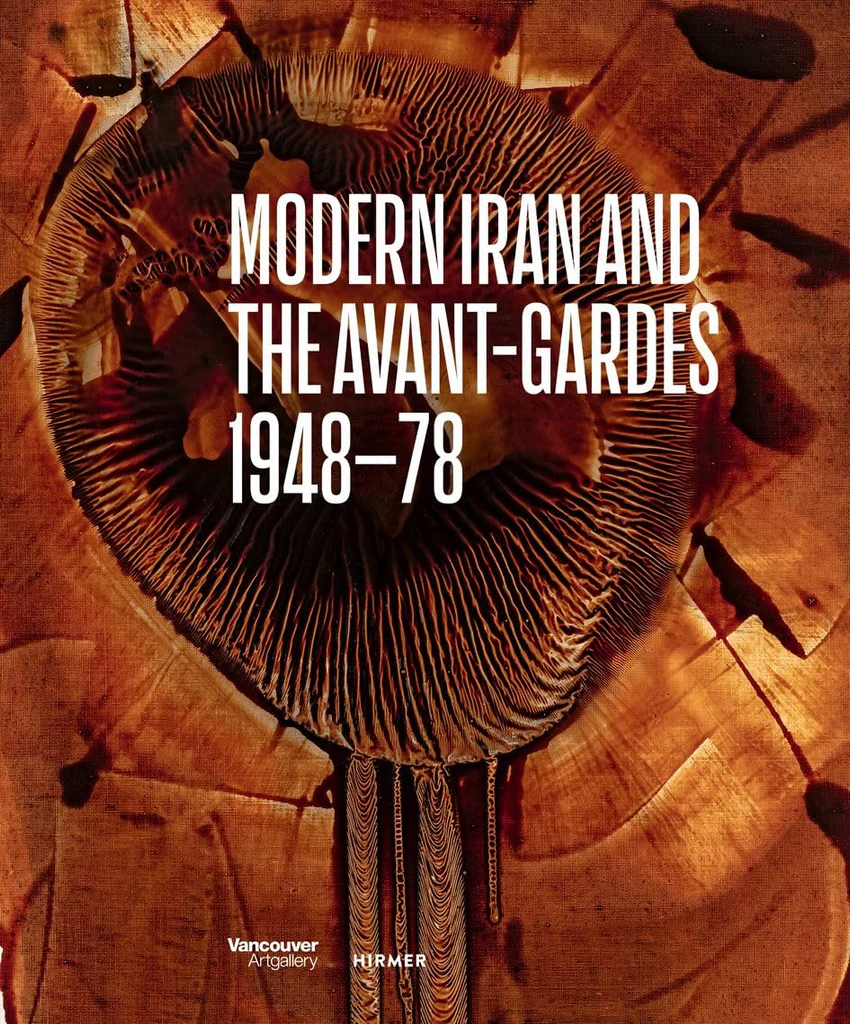
Modern Iran and the Avant-Gardes, 1948–78
Published by the Vancouver Art Gallery and Hirmer Publishers, 2026
Hardcover, 256 pages
Contributors: Hans Ulrich Obrist, Ali Bakhtiari, Fereshteh Daftari, Jeff Derksen, Pantea Haghighi, Davood Madapoor